Introduction: Deploying CS2 servers in Japan requires considering network latency, player distribution, and anti-cheat strategies. This guide is intended for players and operations personnel, focusing on server setup configurations and anti-cheat recommendations for CS2 servers in Japan. It provides actionable technical directions and best practices to help improve fairness and stability.
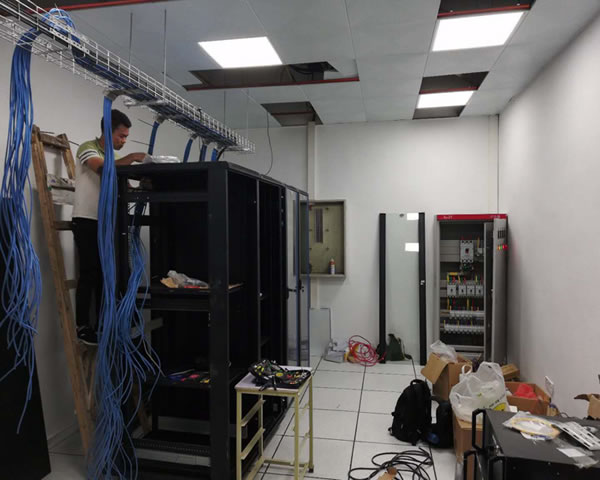
In Japan, game development should prioritize cities with a high concentration of players and international connection points. Tokyo and Osaka are the main hubs, with latency, outbound bandwidth, and network interconnection quality determining the player experience. When selecting a data center, pay attention to the connection from the local area to the international backbone network, DDoS protection capabilities, and the physical distance from nearby players, to ensure low response latency and stable connectivity for CS2 servers.
CS2 is sensitive to upstream and downstream bandwidth, packet loss rate, and jitter. Ensure peer-to-peer connections and sufficient concurrent capacity to avoid single-point congestion ; Use a dedicated line with low packet loss or high-quality public network bandwidth, and configure appropriate network queues and traffic control policies. For external routing, it is recommended to enable Anycast or multi-homed redundancy to reduce the impact of latency caused by path fluctuations.
Hardware selection should prioritize low latency and stability: Multi-core CPU, sufficient memory, and high-performance network interface cards. Optimize the network stack and kernel parameters at the operating system level, adjusting TCP/UDP buffers, connection tracking, and interrupt binding. Dedicated resources are reserved for CS2 to avoid performance fluctuations caused by dense virtualization in the same data center.
Delay control includes tuning network drivers, interrupt affinity, enabling adapter hardware acceleration, and properly configuring MTU and QoS policies. Set priorities for game traffic to prevent high-bandwidth tasks (such as backups and image synchronization) from consuming bandwidth during peak times. Regularly conduct end-to-end latency and packet loss tests to adjust routing and link strategies in a timely manner.
Match replays, logs, and anti-cheat data generate significant write and storage demands. Adopt a hierarchical storage strategy: Hot data is stored on high-IO drives, while historical playback is archived in low-cost long-term storage. Logs need to be collected in a structured manner and transmitted securely to ensure traceability, while also meeting player privacy and regulatory compliance requirements. Historical records should be regularly cleaned up and compressed.
Anti-cheat strategies should combine client-side and server-side measures: Enhanced server-side verification and anomaly detection for behavior, with client-side protection to ensure process integrity. Monitor player behavior and statistical data, and establish a tiered response process. At the same time, implement basic network security protections, such as DDoS protection, access control, and real-time alerts, to reduce the impact of fraud and attacks on operations.
When implementing anti-cheat measures, multi-signal fusion methods should be prioritized: Behavioral analysis, statistical baselines, anomaly detection, and real-time auditing are combined. Design a scalable event aggregation and rule engine to support rapid policy iteration. Focus on controlling the error rate and establishing appeal channels to ensure a balance between player experience and fairness, while retaining sufficient auditable evidence.
A comprehensive monitoring system should cover the network, hosts, game processes, and business metrics, set key performance indicators, and establish alerts and automated responses. Regularly test failover and traffic surge scenarios, and establish patching and update strategies to reduce vulnerability risks. Documented operations processes and permission management ensure coordinated handling of emergencies by multiple roles.
Summary: Deploying CS2 servers in Japan requires comprehensive consideration of location, bandwidth, hardware, storage, and multi-layer anti-cheat strategies. It is recommended to start with network and latency optimization, gradually improve monitoring and behavior analysis capabilities, adopt multi-signal anti-cheat measures, and establish a transparent appeal mechanism. Continuous iteration and data-driven operations strategies are key to ensuring player fairness and server stability.
- Latest articles
- A Must-read Cloud Server For Newbies: Vietnam’s Billing Model And Selection List
- Full Process Guide For Purchasing And Performance Optimization Of VPS With Japanese Native IP
- An Explanation Of Vietnam’s Native Residential IP Pool Management And IP Rotation Strategies From The Perspective Of A Service Provider
- When Selecting Locations For Cloud Service Implementation, Consider Network Latency And Bandwidth Conditions In Computer Rooms In India And Germany.
- How To Buy A US VPS With Bitcoin While Protecting Anonymity And Compliance Risks
- Vps Cambodia Connection Domestic Access Speed Optimization And Node Selection Suggestions
- Main Points Of Fault Recovery And Multi-line Redundancy Design Of Hong Kong Telecom’s Direct-connected Computer Room
- Malaysia Vps Recommends Unlocking The Best Node And Configuration Guide For TikTok
- Step-by-step Implementation Of Korean Server And Chinese Email And Log Localization Settings
- Jay Chou Hong Kong Station Group Chat Group Commercial Cooperation Model And Brand Implantation Practical Cases
- Popular tags
-

The Best Choice Of Dota2 Servers In Japan And The Improvement Of Game Experience
this article explores the best server options for dota 2 in japan and provides suggestions for improving your gaming experience. -

Alternatives And Player Suggestions After Japanese Lol Shuts Down The Server
discuss alternatives after japanese lol servers are closed and players’ suggestions to help players find suitable game options. -
Best Practice On How To Configure The Firewall And Security Group After Iij Cn2 Japan Accesses
this article details the best practices on how to configure firewalls and security groups after iij cn2 japan is connected, covering design principles, rule layering, log monitoring, change management and drill suggestions to improve usability and security.